
Polar bear safety in Svalbard
Polar bears can turn up anywhere in Svalbard at any time of year. Inside a marked zone in Longyearbyen you need no protection; beyond it, visitors go with a guide who carries it.
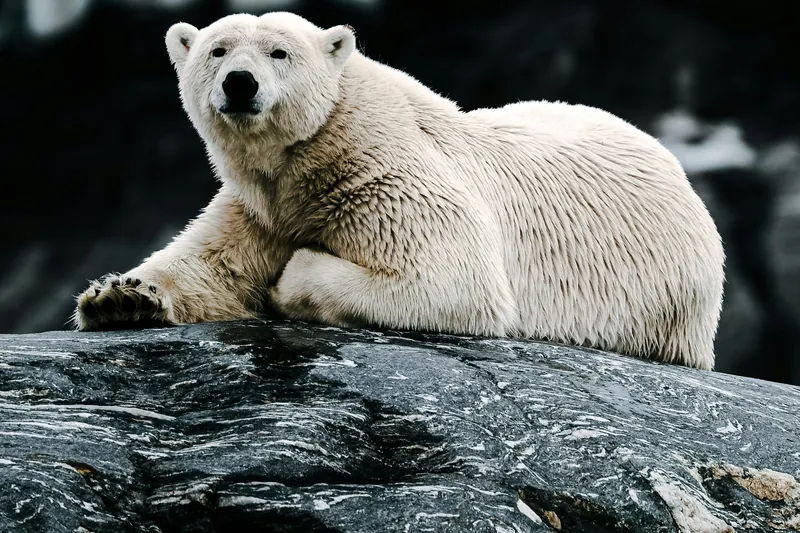
Visit Svalbard puts the polar bear population of Svalbard and the Barents Sea region at around 3,000, of which about 300 stay in Svalbard all year while others move between the archipelago and Franz Josef Land. The bears depend on sea ice for hunting, travel and mating, yet you can meet one anywhere in Svalbard at any time of year. Visit Svalbard describes them as silent animals that can attack quickly and without warning.
Polar bears have been protected by international law since 1973. They belong to the wildlife you find here all year, together with the Arctic fox, the Svalbard rock ptarmigan and the Svalbard reindeer.
The safe zone in Longyearbyen
Inside Longyearbyen there is a zone within which you do not need any equipment for polar bear protection. Visit Svalbard's Norwegian page describes it as the area marked in red. In practice this means you can walk through the centre, visit the museum, shop and eat out without a guide or a rifle. Several sightseeing tours stop for photos at the polar bear warning sign.
Carrying a loaded firearm in the settlement area of Longyearbyen is forbidden. Outside the settlements the law changes: according to the Governor of Svalbard, anyone travelling there must be equipped with suitable means of scaring off polar bears.
Why visitors go out with a guide
The official visitor advice is direct. Visit Svalbard tells you not to leave the town limits without a local guide who has the knowledge and training to keep you safe. One of the Svalbard rules of conduct goes further and advises against leaving the settlements without your own weapon and experience in using it. Firearm applications to the Governor currently take up to eight weeks to process, which rules this out for most short stays.
Guides bring more than a rifle. Outside town there is almost no mobile coverage, the weather changes quickly, and guides are trained to judge conditions and avalanche risk. The Governor's new field safety regulations took effect on 1 January 2026, and from 1 July 2027 tourism businesses must use approved Svalbard guides.
Distance rules since 2025
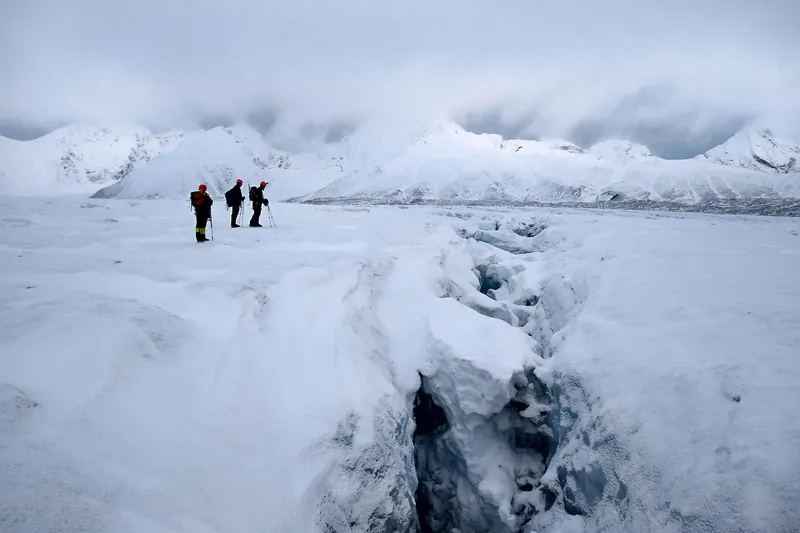
Environmental regulations that entered into force on 1 January 2025 set fixed distances. You must keep at least 300 metres from polar bears, and at least 500 metres from 1 March to 30 June. If you discover a bear at close range, you are obliged to retreat. These distances do not apply in settlements, at research stations, cabins, tents or similar.
It is also forbidden to lure, pursue, feed, disturb or otherwise actively seek out polar bears. That is why there are no polar bear safaris in Svalbard and why no tour on this site promises a sighting. At sea the same regulations require boats to keep at least 150 metres from walrus haul-out sites and to slow to 5 knots within 300 metres.
Insurance and permits
Visit Svalbard points out that ordinary travel insurance normally does not cover the cost of search and rescue operations. Local operators include search and rescue insurance in the price of the activities you book with them. If you plan to travel on your own outside the designated travel area, formerly known as management area 10, you must apply to the Governor at least four weeks before the trip and prove insurance cover for rescue costs. Participants on organised tours do not need to apply themselves.
Camping now needs a permit from the Governor, and an occupied camp must be secured with an alarm and an organised polar bear watch. In an emergency call 112 for the police or 113 for an ambulance; the mainland numbers apply in Svalbard too.
Tours with protection included
For walks beyond the safe zone, a guided tour solves the protection question. The hike to Blomsterdalshøgda climbs steadily across the tundra to a 320-metre plateau, passing the remains of Gruve 1A, known as the American mine. The route leaves the safe zone, and the guide carries polar bear protection. It takes about 2.5 hours, reviewers describe the climb as fairly steep, and it is not suitable for children under 15.
In spring, a snowshoe tour onto Longyearbreen lists a polar bear deterrent among its inclusions, along with snowshoes and safety equipment. It takes about 3.5 hours, covers 3 to 5 km and climbs 400 to 500 metres. Bring your own winter gear. More guided walks for every season are on the hiking and snowshoeing page, and the wildlife safaris page covers the animals you are more likely to see, such as reindeer and Arctic foxes.
All tours side by side
Guided outings beyond the safe zone where polar bear protection is part of the package: a summer hike to Blomsterdalshøgda and a spring snowshoe walk onto Longyearbreen.
| Tour | Format | Duration | Age | Rating | From |
|---|---|---|---|---|---|
| Guided hike to BlomsterdalshøgdaArctic FootstepsA gradual route over the tundra past the remains of Gruve 1A to a plateau above Adventfjorden, outside the safe zone, so the guide carries polar bear safety equipment. | Tundra hikeSafety equipment, snack, soft drinks | 2.5 hours | 15 to 80 | 5.0 (10 reviews) | From €192Free cancellationBook on GetYourGuide |
| Snowshoe hike onto LongyearbreenArctic FootstepsYou walk over the moraine to the foot of Longyearbreen and climb onto the glacier on snowshoes, 3 to 5 km with 400 to 500 m of ascent. | Snowshoe hikeSnowshoes, safety equipment, hot drinks, snacks | 3.5 hours | – | 5.0 (4 reviews) | From €220Free cancellationBook on GetYourGuide |
Prices and ratings come from the booking platform and are shown in euros per person. If you book through these links we earn a commission. Your price stays the same. Sorted by number of reviews.
Questions travellers ask
Can I see polar bears on a tour from Longyearbyen?
There are no polar bear safaris in Svalbard, and sightings cannot be predicted. The rules forbid luring, pursuing or seeking out bears, so no tour can promise one.
Do I need a rifle to walk around Longyearbyen?
No. Inside the marked zone in Longyearbyen you do not need polar bear protection, and carrying a loaded firearm in the settlement is forbidden. Outside the settlements everyone must carry suitable means of scaring off bears.
How close can I get to a polar bear?
At least 300 metres, and at least 500 metres from 1 March to 30 June. If you discover a bear at close range you are obliged to retreat. The rule does not apply in settlements or at cabins and camps.
Do I need special insurance for Svalbard?
Ordinary travel insurance usually does not cover search and rescue costs. Local tour operators include search and rescue insurance in the price of booked activities, and visitors who travel on their own outside the travel area must have it.
What changes for guided tours in 2027?
From 1 July 2027, tourism businesses must use approved Svalbard guides. The new field safety regulations behind this rule have applied since 1 January 2026.
Where these facts come from
Dates, opening hours and rules change. We checked these pages in October 2026; the official source has the final word.
- Sysselmesteren: Firearms
- Sysselmesteren: Travel in Svalbard
- Sysselmesteren: New environmental regulations from 1 January 2025
- Sysselmesteren: Application and registration requirement for trips to Svalbard
- Sysselmesteren: New regulations on field safety from 1 January 2026
- Visit Svalbard: Polar bears
- Visit Svalbard: Safety in Svalbard
- Visit Svalbard: Din sikkerhet på Svalbard (Norwegian)
- Visit Svalbard: Svalbardvettreglene (Norwegian)
- Visit Svalbard: Longyearbyen Community Guidelines
- Visit Svalbard: FAQ
- Tour pages on GetYourGuide, checked 19 October 2026

